Reflect
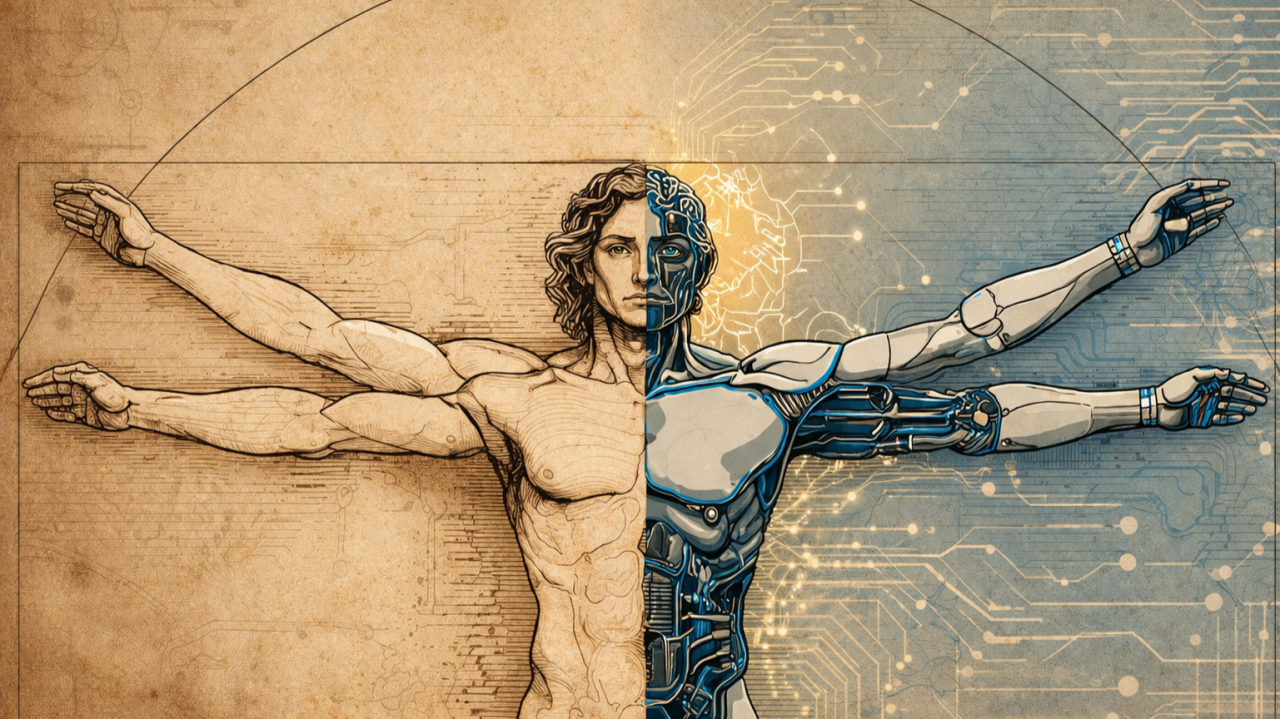
Towards more than human
On the different classes of Human + AI engagement emerging, and why agency matters more than adoption.
I am in a phase of conducting deeper research into Personal AI and spending more time digging into the work of Daniel Miessler. What I find compelling in Daniel's perspective is that Personal AI is not really about novelty or convenience. It is about helping the individual find their voice, clarify their goals, and use AI intentionally to become more effective, more focused, and perhaps more fully themselves.
That has really stayed with me.
It has also made me wonder whether we are starting to see different classes of Human + AI engagement emerge. I do not mean classes of people by worth or value, but different relationships with AI shaped by agency, confidence, literacy, and intentionality.
My current thinking looks something like this:
1. Deep Personal AI users
These are people who build a highly intentional relationship with AI. They are likely to customise tools, shape workflows, connect services together, and use AI as an extension of how they think and work. Some of these users will be technically confident, comfortable with scripting, automation, CLI environments, and broader security considerations. They will not just use AI occasionally; they will direct it toward clear personal or professional goals. In many cases, these people will see Human + AI as a genuine force multiplier when used well.
2. Practical AI users
These are people who use AI regularly and safely to support day-to-day work and life. They may use it for writing, structuring ideas, research, summarisation, problem solving, or personal productivity. They are not necessarily trying to build a fully personalised AI stack, but they are getting real value from the tools available to them. I suspect this is where many people will sit. They do not need to be deeply technical to benefit meaningfully. They simply need enough literacy and judgement to use AI well.
3. Passive or convenience-led AI users
These are people who use AI frequently because it is easy, fast, and available, but without much reflection on how it is shaping them. They may not think too much about where their data goes, what trade-offs they are making, or whether overreliance on AI is weakening parts of their own capability, judgement, or creativity. This is one of the areas that concerns me most. Not because people are careless by nature, but because convenience is powerful, and drift is easy.
4. Reluctant or low-adoption users
These are people who are cautious, hesitant, or simply less inclined to engage deeply with AI. That may be because of trust, confidence, interest, role, or stage of life. It does not mean they lack intelligence or value. It simply means their path into AI may look very different. Not everyone will enter this space through the same door.
Looking at this list, I am very aware that it is subjective and incomplete. But it does surface something important for me.
The real issue is not simply AI adoption. It is agency.
Will we use AI in ways that sharpen our thinking, strengthen our voice, and extend our ability to contribute? Or will we gradually hand over more of our intellect and growth for the sake of ease, speed, and comfort?
This is where I find Daniel Miessler's message so compelling. The part that resonates most with me is not just the technology itself, but the idea of elevating humanity. If Human + AI is the future, then I think the real challenge is making sure the human stays active, intentional, and fully engaged.
So perhaps the call is this: let us not pursue AI merely for convenience. Let us pursue it in ways that deepen human capability, insight, and purpose. This applies to all aspects of our lives but likely to be conducted in our daily small tasks as well as strategic decisions.
That feels to me like a far more meaningful ambition than simply becoming more efficient.
What do you think?